Support the Cause
    Back to Documents
    Sequential ExaminationOctober 21, 2026

    Episode Number 11

    Episode Number 11: GBC Resolution No. 10 – 11th March, 1981. The Eleven Gurus "Hold On".

    Srila Prabhupada's Founding Documents & The GBC Resolutions Record (1975–2026)

    A Sequential Examination

    Episode Number 11

    GBC Resolution No. 10 – 11th March, 1981

    Where We Are in the Series

    Episodes 11-15 cover 1981:

    First, two GBC committees are given responsibility over the initiating gurus, one with the power to nominate new ones.

    Then ISKCON property in North America is placed in local trusts, and two resolutions are recorded only as "Unpublished."

    Trustees are to be the names approved in Srila Prabhupada's last Will, though in exceptional cases the local GBC may recommend others.

    Finally, the GBC sets out its members' duties, calling itself Srila Prabhupada's representative and supreme management authority, with its proceedings kept in secrecy.

    Each step is placed beside Srila Prabhupada's founding documents with one question: where there is a difference, where is the authority for it?

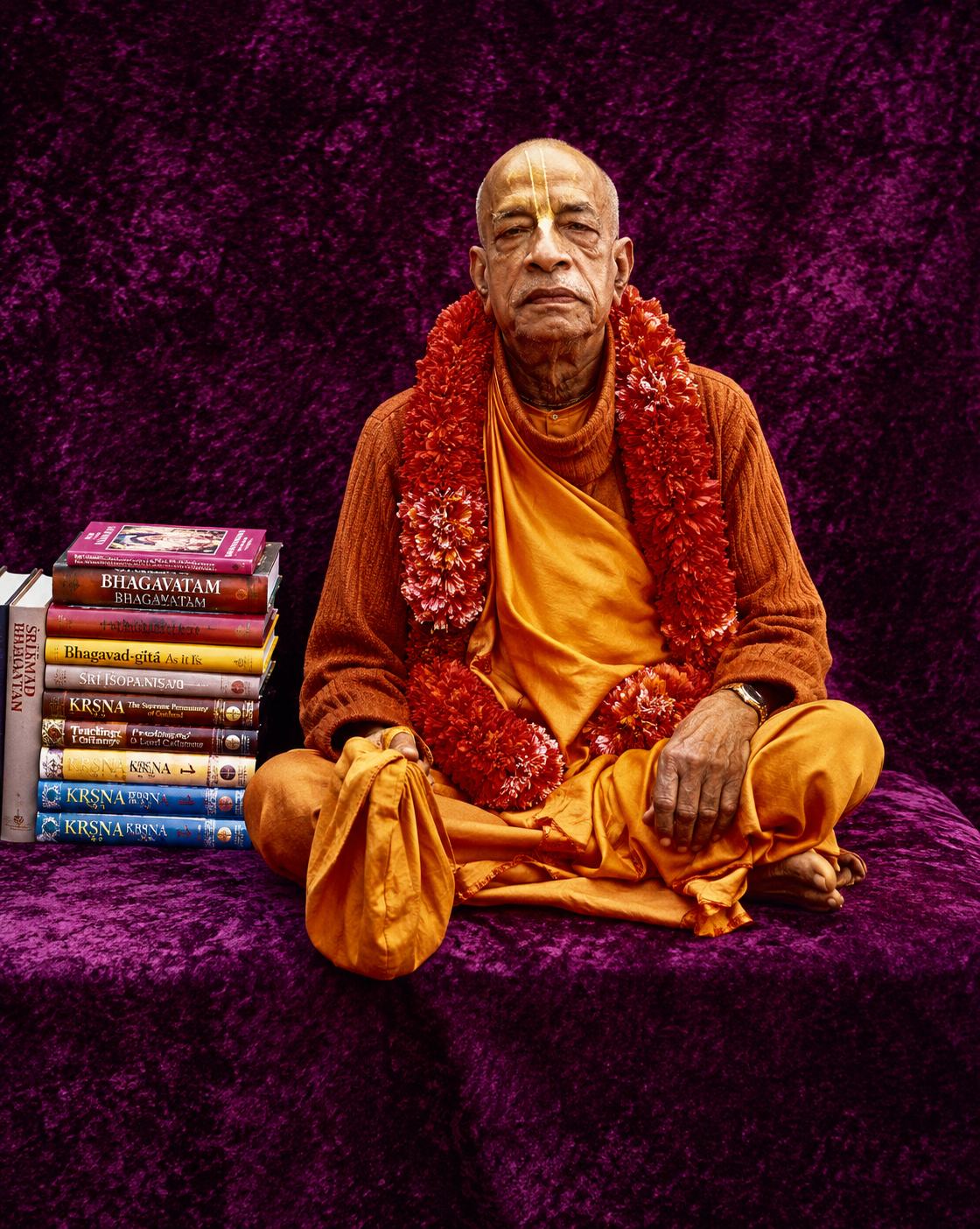
    His Divine Grace A.C. Bhaktivedanta Swami

    Prabhupada — Founder-Acharya of ISKCON

    "To prove by active work and preaching that Lord Sri Krishna is the only enjoyer of all the outcomes of individual and collective sacrifice, penance, meditation, arts, culture, science, because He is the Supreme Proprietor of the whole universe, eternally apart of Him everyone knows Him as a friend. Real peace can be attained when this is realized, in fact."

    "To attempt to save men individually from the chain of victimization the ongoing trend in modern civilization operates by, in the name of ideologies of false sentiment, so that Man may again be a free soul, to act and live freely with spiritual vision. This is possible by individual spiritual initiation, Diksha, when a man can see everything in Godhead and Godhead in everything."

    - Constitution of Association 1966

    GBC Resolution No. 10 - ISKCON Law - Six Clauses - 11th March, 1981

     "That the governing body commission shall delegate to the Acharya Standing Committee the following additional responsibilities:"

    "Clause 1: To hold discussions and make proposed mutual policies for how the ISKCON Acharyas can further the GBC and Srila Prabhupada's desire and see to the fulfillment of Prabhupada's will."

    "Clause 2: To formulate proposed policies and standards of action amongst the ISKCON initiating Acharyas by which guidelines, the faith, integrity, and respect of the disciples and the devotees of ISKCON towards the Guru Parampara (ISKCON Acharyas) will be maintained at the highest level."

    "Clause 3: To tender recommendations to the GBC when required on issues affecting the disciple-guru relationship and the preservation of the Guru-Parampara."

    "Clause 4: To attempt to avoid the possibility of any discrepancy or misunderstanding amongst the Acharyas through isthagosthi."

    "Clause 5: To meet once a year at Gaura Purnima meeting time, or when a GBC officers' committee calls the entire committee to meet."

    "Clause 6: To keep the proceedings of the Acharya Standing Committee confidential, except recommendations to the GBC or the GBC officers' committee."

    Dear Devotee — What Is This Reference About?

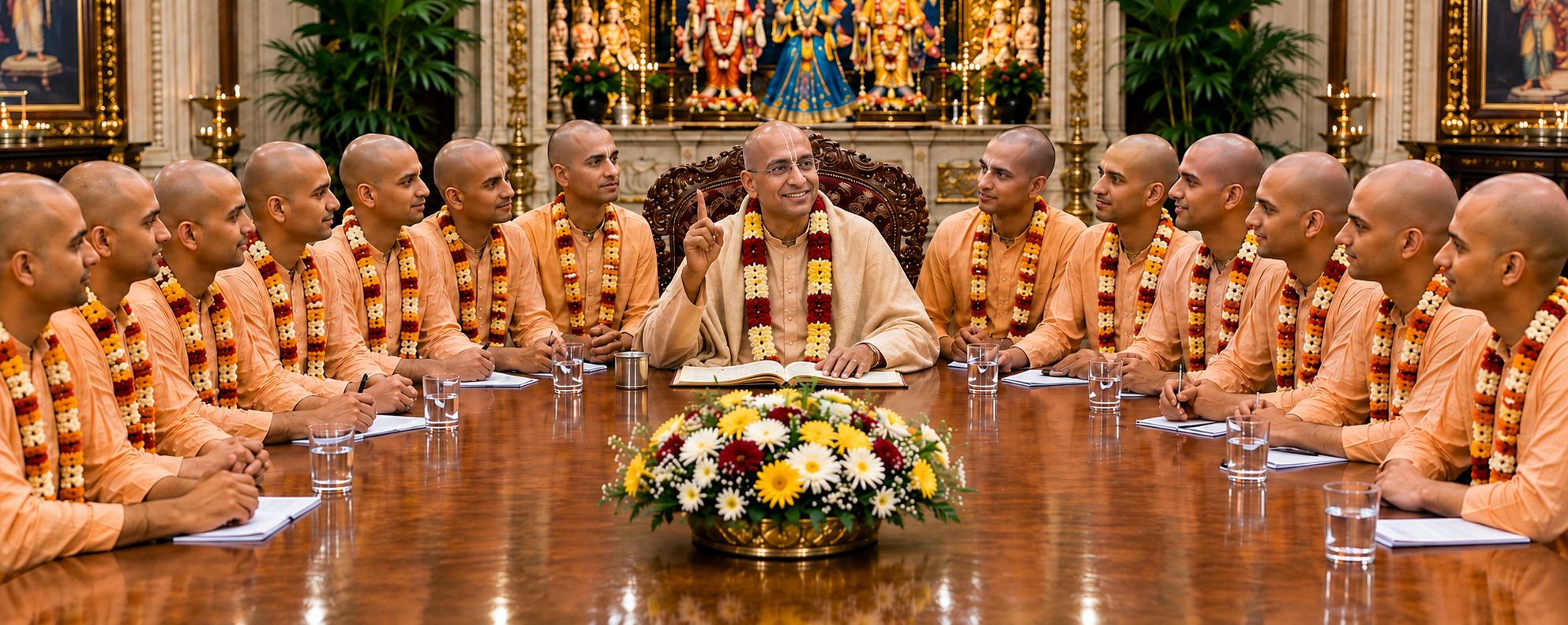
    In this series we saw how the eleven became sole initiating gurus and wrote their own rules into ISKCON Law.

    ________________________________________________________________

    On the same day — March 11, 1981 — the GBC passed Resolution 10.

    ________________________________________________________________

    This single resolution gave the Acharya Standing Committee — the eleven — six additional responsibilities.

    ________________________________________________________________

    Together these six clauses made the eleven more powerful than the GBC itself on matters of guru, disciple and parampara.

    __________________________________________________________

    What These Six Clauses Actually Mean

    Let us read each clause in plain language.

    ________________________________________________________________

    Clause 1 — The eleven will decide how to fulfill Srila Prabhupada's will.

    Srila Prabhupada left a Will. He described his intentions in it. Now the eleven will decide how to fulfill it. Not the GBC. The eleven.

    __________________________________________________________

    Clause 2 — The eleven will set the standards by which devotees respect the gurus.

    The eleven will decide how devotees should regard them. They will write the guidelines for their own worship and respect.

    __________________________________________________________

    Clause 3 — The eleven will advise the GBC on the guru-disciple relationship.

    The GBC defers to the eleven on the most important relationship in Vaishnava life.

    __________________________________________________________

    Clause 4 — The eleven will sort out disagreements among themselves.

    If two of the eleven disagree — they sort it out among themselves. No outside arbitration. No GBC oversight.

    ________________________________________________________________

    Clause 5 — They meet once a year at Gaura Purnima.

    Clause 6 — Everything is confidential.

    ______________________________________________________________

    All of this — the policies, the standards, the discussions, the disagreements — is confidential. The devotees who live under these policies cannot see them.

    DEVOTEE ASKS — THE RECORD SPEAKS

    Every answer below is quoted word for word from the documents, or states what the documents contain.

    Devotee

    Can this committee make policy for the initiating gurus?

    The Record

    The resolution uses these words: "proposed mutual policies," "proposed policies and standards of action," and "To tender recommendations to the GBC when required."

    Devotee

    Clause 2 sets standards for the respect devotees show the gurus. Were the devotees asked?

    The Record

    The record does not say. Clause 2 gives the task to the Acharya Standing Committee.

    Devotee

    If the Acharyas disagree, how is it settled?

    The Record

    "To attempt to avoid the possibility of any discrepancy or misunderstanding amongst the Acharyas through isthagosthi." The resolution names no other way.

    Devotee

    Will the devotees be able to read what the committee discusses?

    The Record

    "To keep the proceedings of the Acharya Standing Committee confidential, except recommendations to the GBC or the GBC officers' committee." The record does not say whether those recommendations were published.

    Devotee

    Whom did Srila Prabhupada name as the managing authority of ISKCON?

    The Record

    "The Governing Body Commission (GBC) will be the ultimate managing authority of the entire International Society for Krishna Consciousness."

    — Srila Prabhupada's Last Will and Testament, 6 June 1977

    Devotee

    Does any founding document mention an Acharya Standing Committee?

    The Record

    No. The founding documents do not mention it.

    Where there is a difference, where is the authority for it?

    ✦ Did You Know? ✦

    Srila Prabhupada was as discerning in legal matters and documents as he was in spiritual matters.

    ✦ Did You Know? ✦

    Resolution 10 was passed on the same day as Resolutions 3, 4 and 5 examined in this series.

    In one day — March 11, 1981 — the GBC gave the eleven gurus the power to:

    •  Recommend new gurus — confidentially.

    •  Write the policy on selecting spiritual masters — made ISKCON Law.

    •  Interpret Srila Prabhupada's will — confidentially.

    •  Set standards for how devotees should respect them — confidentially.

    •  Resolve disagreements among themselves — without outside oversight.

    ✦ Did You Know? ✦

    Did you know? Srila Prabhupada's July 9th Letter established an officiating initiation system. Several small ISKCON-aligned communities have continued to practise this system since 1977. Through that system they have a living, growing pool of Srila Prabhupada's initiated disciples — through the officiating route - who would qualify as property trustees under the exact specification of his Will. We're referring here to Srila Prabhupada's statement, 'provided the new director is my initiated disciple'. The July 9th Letter is available to read. The Will is available to read. The solution Srila Prabhupada described has not been lost. It is simply available.

    This work is sequential, not selective. It does not examine every GBC resolution. Rather, it examines every resolution, statement, or policy that conflicts with, departs from, or contravenes Śrīla Prabhupāda's founding documents and direct instructions.

    ACCESS THE ARCHIVES

    Explore Srila Prabhupada's original founding documents and the complete GBC Resolutions Record (1975–2026), now available in our public Google Drive archive — free to access, download, and share.

    Help us spread awareness by forwarding this email to fellow devotees and supporters.

    "This episode is available in multiple languages at

    www.justiceforsrilaprabhupadafoundation.com

    use the translate button on the page."

    Coming Next

    Supplement No. 4 (3 min read)

    The GBC Mandate

    23rd October 2026 · 6:00 PM IST

    Subscribe to ensure you receive every episode directly in your inbox.

    Copyright © 2026 Justice For Srila Prabhupada Foundation, All rights reserved.
    Our e-mail address is:
    justiceforsrilaprabhupada@gmail.com
    Want to change how you receive these emails?
    You can
    unsubscribe from this list or Manage your preference.

    Disclaimer — Use of the Term "Resolution"

    For the purposes of this work, the term "resolution" or "resolutions" is used as a collective reference and, where applicable, includes statements, action orders, provisional orders, amendments, and other decisions or recorded actions appearing in the GBC records.

    The use of the term "resolution" should therefore not be understood as altering or replacing the original classification or designation given to any particular item in the GBC records.

    Disclaimer and Statement of Independence

    This publication is prepared and presented solely for informational, educational, research and public-discussion purposes. It examines historical and institutional documents, including Srila Prabhupada's founding documents, publicly available GBC resolutions, statements and ISKCON laws, and considers the relationship between those documents and the authority exercised thereunder.

    Unless otherwise indicated, quotations from GBC resolutions, statements and ISKCON laws are reproduced from publicly available records and are intended to be quoted accurately and in their original context. Founding documents and other historical materials referred to herein have been reproduced or cited from publicly available primary or archival sources. Readers are encouraged to consult the original documents and sources themselves.

    The analysis and conclusions expressed in this publication are those of the authors/Foundation and are presented for discussion, research and educational purposes. They do not purport to constitute legal advice, a judicial determination, or a statement of binding legal or doctrinal authority. References to legal principles, doctrines or authorities are intended to explain the analytical framework adopted in this publication and should not be understood as representing that any particular legal conclusion has been finally adjudicated by a competent court or other authority.

    Where this publication expresses an interpretation, inference, criticism or opinion concerning institutional governance, authority or historical events, such statements are intended as good-faith analysis based upon the documents and materials identified or cited herein. Any distinction between documented fact, inference, interpretation and opinion is intended to be maintained throughout the publication.

    The Justice for Srila Prabhupada Foundation ("JFSPF" or the "Foundation") is an independent organization. It is not affiliated with, controlled by, endorsed by, authorized by, or representative of ISKCON, the Governing Body Commission ("GBC"), or any ISKCON-affiliated or associated entity, unless expressly stated otherwise.

    The Foundation does not represent that the GBC resolutions record, ISKCON archival material, or any other historical record examined for this publication is complete or exhaustive. The absence of a document from the sources examined should not be construed as proof that no such document exists. Readers are therefore encouraged to consult the underlying primary sources and any additional relevant materials.

    Nothing in this publication is intended to attribute a statement, position, motive, act or omission to any individual or organization beyond what is supported by the sources identified. Where the publication discusses disputed matters, competing interpretations or allegations, those matters are intended to be understood in that context and not as findings of a court or other competent authority.

    The publication is not intended to suggest that JFSPF speaks for Srila Prabhupada, his successors, ISKCON, the GBC, or any other individual or institution, nor is it intended to interfere with or determine any person's legal rights or remedies.

    All rights concerning third-party materials remain with their respective owners. Where third-party material is reproduced, quoted or referred to, such use is intended to be limited to the purposes of research, criticism, review, scholarship, education, reporting or discussion, as applicable under law. The inclusion of such material does not imply ownership of that material by JFSPF.

    The Foundation reserves the right to correct, clarify or update this publication if additional authentic primary-source material becomes available or if any factual error is identified.
    Powered by Google TranslateTranslate
    Original text
    Rate this translation
    Your feedback will be used to help improve Google Translate