Support the Cause
    Back to Documents
    Sequential ExaminationOctober 26, 2026

    Episode Number 12

    Episode Number 12: GBC Resolution No. 11 - 11th March 1981. The GBC's initiating gurus - An Achilles' Heel.

    Srila Prabhupada's Founding Documents & The GBC Resolutions Record (1975–2026)

    A Sequential Examination

    Episode Number 12

    GBC Resolution No. 11 - 11th March 1981

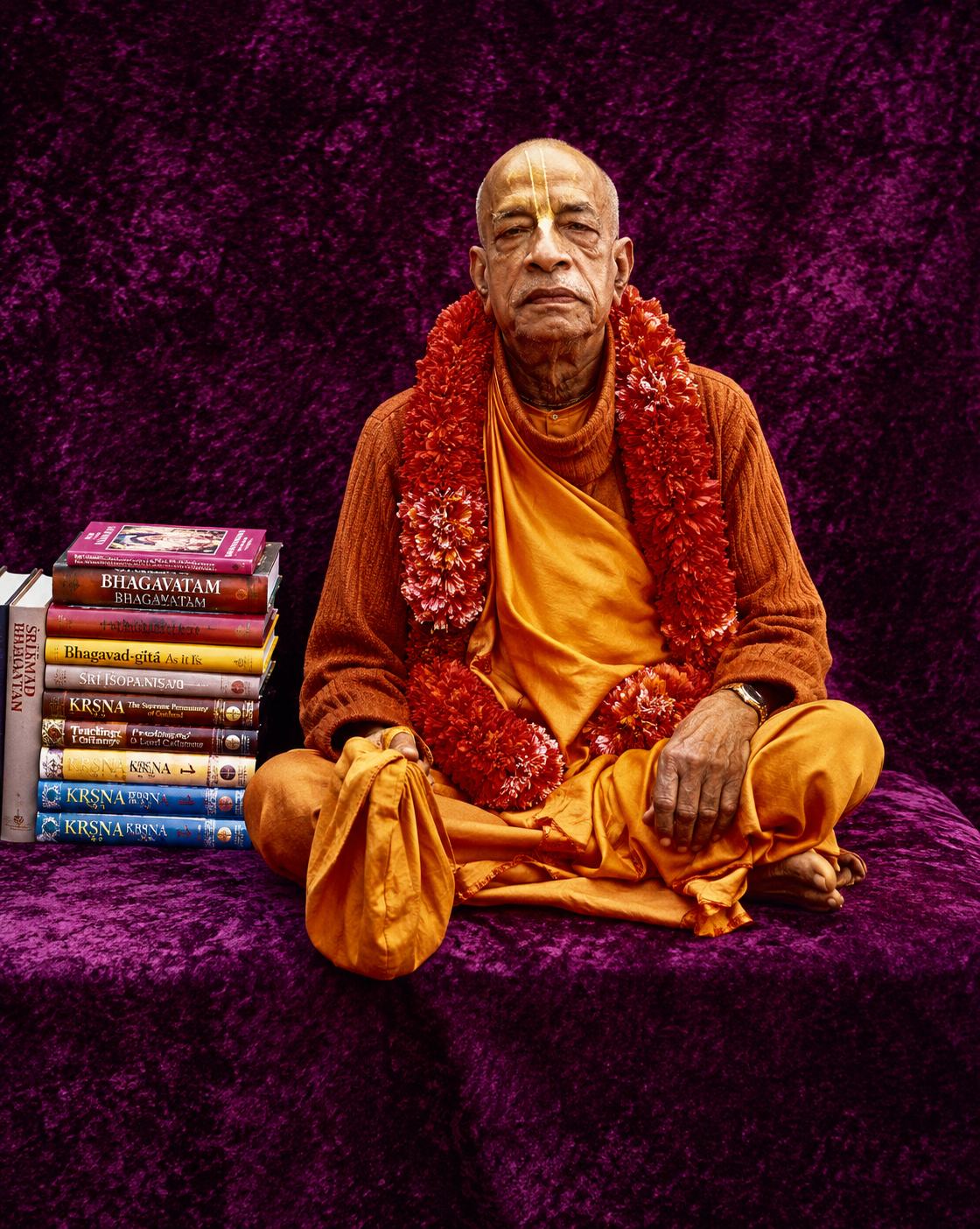
    His Divine Grace A.C. Bhaktivedanta Swami

    Prabhupada — Founder-Acharya of ISKCON

    "After considering the recommendation, these representatives may accept the devotee as an initiated disciple of Srila Prabhupad by giving a spiritual name, or in the case of second initiation, by chanting on the Gayatri thread, just as Srila Prabhupad has done. The newly initiated devotees are disciples of His Divine Grace A.C. Bhaktivedanta Swami Prabhupad, the above eleven senior devotees acting as His representative."

    — Final Order Letter, July 9 1977. Approved by A. C. Bhaktivedanta Swami

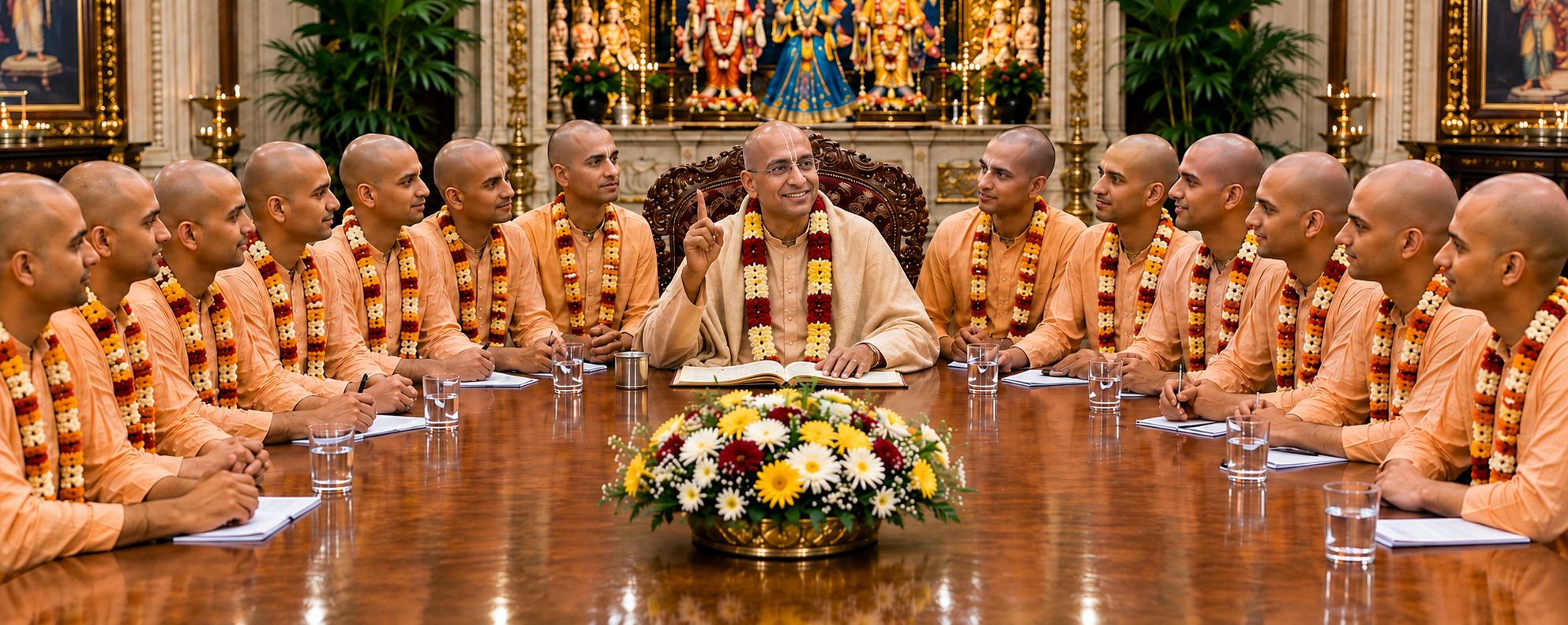
    The GBC Committee of Initiating Gurus — The Club That Elects Its Own Members

    ____________________________________________________________

    GBC Resolution No. 11 - ISKCON Law (amendment to): [to law #1, meeting #7 of 27.3.78] – 11th March, 1981:

    "That a GBC committee will be formed, consisting of the GBC members who are initiating Gurus. They have the power to nominate new initiating gurus, by consensus. Any nomination shall be forwarded to the governing body commission for their confirmation."

    By 11th March 1981 the structure was complete. A committee had been formed inside the GBC, composed of those GBC members who were also initiating gurus. This committee had the power to nominate new initiating gurus. By consensus. The nominations would then go to the GBC for confirmation.


    Read it again. The committee that nominates is composed of initiating gurus. The body that confirms is the GBC. Most of the initiating gurus are also GBC members. So the committee that nominates and the body that confirms share most of the same faces.

    This is not a checks and balances system. This is a circular confirmation system. The nominees are selected by the very people whose club the nominees are being invited to join. The confirmation is given by a body that is largely composed of the same people.


    If you say it enough times it becomes the truth. A committee that selects its own successors does not need to announce its authority. It simply continues. Each new member selected by the existing members. Each existing member confirmed by the body they already sit on. The circle closes. The club perpetuates itself. And after enough cycles, no one remembers that it was ever a circle.


    The Club That Elects Its Own Members.

    In every legitimate institution, the selection of those who hold the highest spiritual authority is the most carefully guarded process. In the Vaiṣṇava tradition, that authority is not voted upon, not nominated by committee, and not confirmed by a governing body. It is recognised — by those who are themselves spiritually advanced — and it flows through the paramparā.


    ISKCON Law 11 replaced that recognition with a nomination process. The initiating gurus nominate by consensus. The GBC confirms. The new guru joins the committee. The committee grows. The circle widens.


    The original Final Order Letter (July 9, 1977) named eleven. The number was never sealed at eleven. But what was allowed was the adding of representatives who would initiate on behalf of Srila Prabhupada, the newly initiated devotees remaining his own disciples. By 1981 the eleven had become a committee with the power to name more — and now not officiating representatives but initiating gurus, named not by his hand but by their own. There was no upper limit. There was no external check. There was no His Divine Grace to approve or decline. There was only the committee, and the body that confirmed what the committee proposed.

    It Becomes a Tradition.

    There is a principle well understood in institutional life: a process repeated often enough acquires the appearance of legitimacy. The first time a committee nominates its own successors, it may raise eyebrows. The tenth time, it is procedure. The hundredth time, it is tradition.

    DIALOGUE

    The Missing Letter

    The following is an illustrative dialogue based upon the Final Order Letter (July 9, 1977), Śrīla Prabhupāda's Will and Testament (June 6, 1977), the recorded GBC resolutions and the GBC Chairman's Annual Report 2025–26 (ISKCON Annual General Meeting 2026) to the ISKCON world.

    A young Mataji had spent several evenings reading old GBC records.

    One morning in Mayapur she approached a senior Prabhuji.

    "Prabhu, may I ask you something?"

    "Of course."

    "I have been trying to understand how the initiation system changed."

    Prabhuji smiled.

    "That subject has been discussed for many years."

    "I know. That is why I decided not to begin with the arguments. I began with the documents."

    She opened a folder.

    "Here is the July 9, 1977 letter. Eleven representatives are named. They may accept devotees for initiation. And the letter says the newly initiated devotees are disciples of Śrīla Prabhupāda."

    "Yes."

    "And by 1981, GBC members who were themselves initiating gurus formed a committee which could nominate new initiating gurus, and the GBC confirmed them?"

    "That became the system."

    "And the representative system?"

    "That was only for while Śrīla Prabhupāda was physically present."

    The young Mataji nodded.

    "That is what I have been told."

    She took out another document.

    "This is the GBC's own Annual Report for 2025–26, given to the whole ISKCON world before the Annual General Meeting."

    "Yes, I heard it."

    "It says the GBC is 'answerable and accountable' to the devotees. So I thought I would take it at its word, and ask."

    Prabhuji waited.

    "The Report says there are on record 2,200 lectures, 1,300 conversations and 6,000 letters."

    "Yes."

    "It also says the July 9 letter is one letter that Śrīla Prabhupāda 'himself personally did not write.'"

    "Yes, his secretary wrote it."

    The young Mataji turned the letter around.

    "But here at the bottom it says 'Approved', and there is Śrīla Prabhupāda's signature."

    "Yes."

    "Among those 6,000 letters, Prabhu, how many were typed by secretaries and signed by him?"

    Prabhuji did not answer.

    The young Mataji turned a page of the Report.

    "The Report also says the Global Property Office protects over 1,162 properties 'as ordered in Śrīla Prabhupāda's will.'"

    "That is right."

    "The Will was also typed by others. He signed it. And the Report treats it as an order still in force today, long after his departure."

    "Yes."

    "So one signed document from 1977 still governs the properties. Another signed document from 1977, one month later, stopped governing initiations."

    She placed the July 9 letter on the table.

    "I am not asking what someone explained later. I am only asking what the record says."

    "Go on."

    "If this representative system was meant to end with Śrīla Prabhupāda's physical departure, then somewhere among those 2,200 lectures, 1,300 conversations and 6,000 letters, there must be a letter saying so."

    Silence.

    "The Report also speaks of a central repository for records and an investigative arm. So the records are there, and people are there to search them."

    She closed the folder.

    "I am looking for only one."

    "One what?"

    "The letter that says this letter was temporary."

    She stood to leave.

    At the door she turned around.

    "One final question, Prabhu."

    "Yes?"

    "If a signed letter is not enough because Śrīla Prabhupāda did not personally write it, why is a signed will enough?"

    She paused.

    "And if the July 9 letter is only one letter, where is the other letter?"
    ✦ Did You Know? ✦

    The 1978 resolution that this law amends stated that a GBC committee of initiating gurus would choose new gurus once per year in Mayapur.


    By 1981, the language had shifted from 'choose' to 'nominate by consensus' with GBC confirmation. The process had acquired procedural dressing.


    But the outcome was identical: the existing initiating gurus selected the new initiating gurus. The club elected its own members. The dressing changed. The meal did not.

    DEVOTEE REFLECTION 

    Words can betray but actions never do

    They speak the truth every time.

    DEVOTEE REFLECTION

    The Keys

    The GBC concluded that the keys left in the founding documents were no longer sufficient.

    Instead of using those keys, they chose to open another safe—one in which they themselves held the keys.

    Sometimes, the location of the keys tells the story better than the reason they were changed.

    DEVOTEE REFLECTION

    Locked Cupboard

    The founding documents provide no mechanism for amendment, nor do they permit unilateral changes. They were never meant to be locked away in a cupboard.

    DEVOTEE REFLECTION

    Look Again

    This work does not seek to assert. It seeks to present. It is most useful to those who are prepared to look again.

    ✦ Did You Know? ✦

    A person may work for a company for thirty years and ALL it takes is one signed letter of resignation to end that relationship.

    ✦ Did You Know? ✦

    "It is imperative that a serious person accept a bona fide spiritual master in terms of the çästric injunctions. Çré Jéva Gosvämé advises that one not accept a spiritual master in terms of hereditary or customary social and ecclesiastical conventions."

    -   Cc Adi-lila 1.35 purport  

    ✦ Did You Know? ✦

    "Mundane votes have no jurisdiction to elect a Vaiñëava äcärya."

    - CC Madhya-lila 1.220 purport

    This work is sequential, not selective. It does not examine every GBC resolution. Rather, it examines every resolution, statement, or policy that conflicts with, departs from, or contravenes Śrīla Prabhupāda's founding documents and direct instructions.

    ACCESS THE ARCHIVES

    Explore Srila Prabhupada's original founding documents and the complete GBC Resolutions Record (1975–2026), now available in our public Google Drive archive — free to access, download, and share.

    Help us spread awareness by forwarding this email to fellow devotees and supporters.

    "This episode is available in multiple languages at

    www.justiceforsrilaprabhupadafoundation.com

    use the translate button on the page."

    Coming Next

    Episode No. 13 (6 min read)

    The 3 Trustees - Which 3?

    28th  October 2026 · 6:00 PM IST

    Subscribe to ensure you receive every episode directly in your inbox.

    Copyright © 2026 Justice For Srila Prabhupada Foundation, All rights reserved.
    Our e-mail address is:
    justiceforsrilaprabhupada@gmail.com
    Want to change how you receive these emails?
    You can
    unsubscribe from this list or Manage your preference.

    Disclaimer — Use of the Term "Resolution"

    For the purposes of this work, the term "resolution" or "resolutions" is used as a collective reference and, where applicable, includes statements, action orders, provisional orders, amendments, and other decisions or recorded actions appearing in the GBC records.

    The use of the term "resolution" should therefore not be understood as altering or replacing the original classification or designation given to any particular item in the GBC records.

    Disclaimer and Statement of Independence

    This publication is prepared and presented solely for informational, educational, research and public-discussion purposes. It examines historical and institutional documents, including Srila Prabhupada's founding documents, publicly available GBC resolutions, statements and ISKCON laws, and considers the relationship between those documents and the authority exercised thereunder.

    Unless otherwise indicated, quotations from GBC resolutions, statements and ISKCON laws are reproduced from publicly available records and are intended to be quoted accurately and in their original context. Founding documents and other historical materials referred to herein have been reproduced or cited from publicly available primary or archival sources. Readers are encouraged to consult the original documents and sources themselves.

    The analysis and conclusions expressed in this publication are those of the authors/Foundation and are presented for discussion, research and educational purposes. They do not purport to constitute legal advice, a judicial determination, or a statement of binding legal or doctrinal authority. References to legal principles, doctrines or authorities are intended to explain the analytical framework adopted in this publication and should not be understood as representing that any particular legal conclusion has been finally adjudicated by a competent court or other authority.

    Where this publication expresses an interpretation, inference, criticism or opinion concerning institutional governance, authority or historical events, such statements are intended as good-faith analysis based upon the documents and materials identified or cited herein. Any distinction between documented fact, inference, interpretation and opinion is intended to be maintained throughout the publication.

    The Justice for Srila Prabhupada Foundation ("JFSPF" or the "Foundation") is an independent organization. It is not affiliated with, controlled by, endorsed by, authorized by, or representative of ISKCON, the Governing Body Commission ("GBC"), or any ISKCON-affiliated or associated entity, unless expressly stated otherwise.

    The Foundation does not represent that the GBC resolutions record, ISKCON archival material, or any other historical record examined for this publication is complete or exhaustive. The absence of a document from the sources examined should not be construed as proof that no such document exists. Readers are therefore encouraged to consult the underlying primary sources and any additional relevant materials.

    Nothing in this publication is intended to attribute a statement, position, motive, act or omission to any individual or organization beyond what is supported by the sources identified. Where the publication discusses disputed matters, competing interpretations or allegations, those matters are intended to be understood in that context and not as findings of a court or other competent authority.

    The publication is not intended to suggest that JFSPF speaks for Srila Prabhupada, his successors, ISKCON, the GBC, or any other individual or institution, nor is it intended to interfere with or determine any person's legal rights or remedies.

    All rights concerning third-party materials remain with their respective owners. Where third-party material is reproduced, quoted or referred to, such use is intended to be limited to the purposes of research, criticism, review, scholarship, education, reporting or discussion, as applicable under law. The inclusion of such material does not imply ownership of that material by JFSPF.

    The Foundation reserves the right to correct, clarify or update this publication if additional authentic primary-source material becomes available or if any factual error is identified.

    Powered by Google TranslateTranslate
    Original text
    Rate this translation
    Your feedback will be used to help improve Google Translate