Support the Cause
    Back to Documents
    Sequential ExaminationNovember 9, 2026

    Episode Number 17

    Episode Number 17: GBC Resolution No. 52 – 13th March, 1981. The Ladder — Jump.

    Srila Prabhupada's Founding Documents & The GBC Resolutions Record (1975–2026)

    A Sequential Examination

    Episode Number 17

    GBC Resolution No. 52 – 13th March, 1981

    The Ladder — Jump

    Reading Time: 6 minutes

    9th November 2026

    "This episode is available in multiple languages at www.justiceforsrilaprabhupadafoundation.com. Use the translate button on the page."

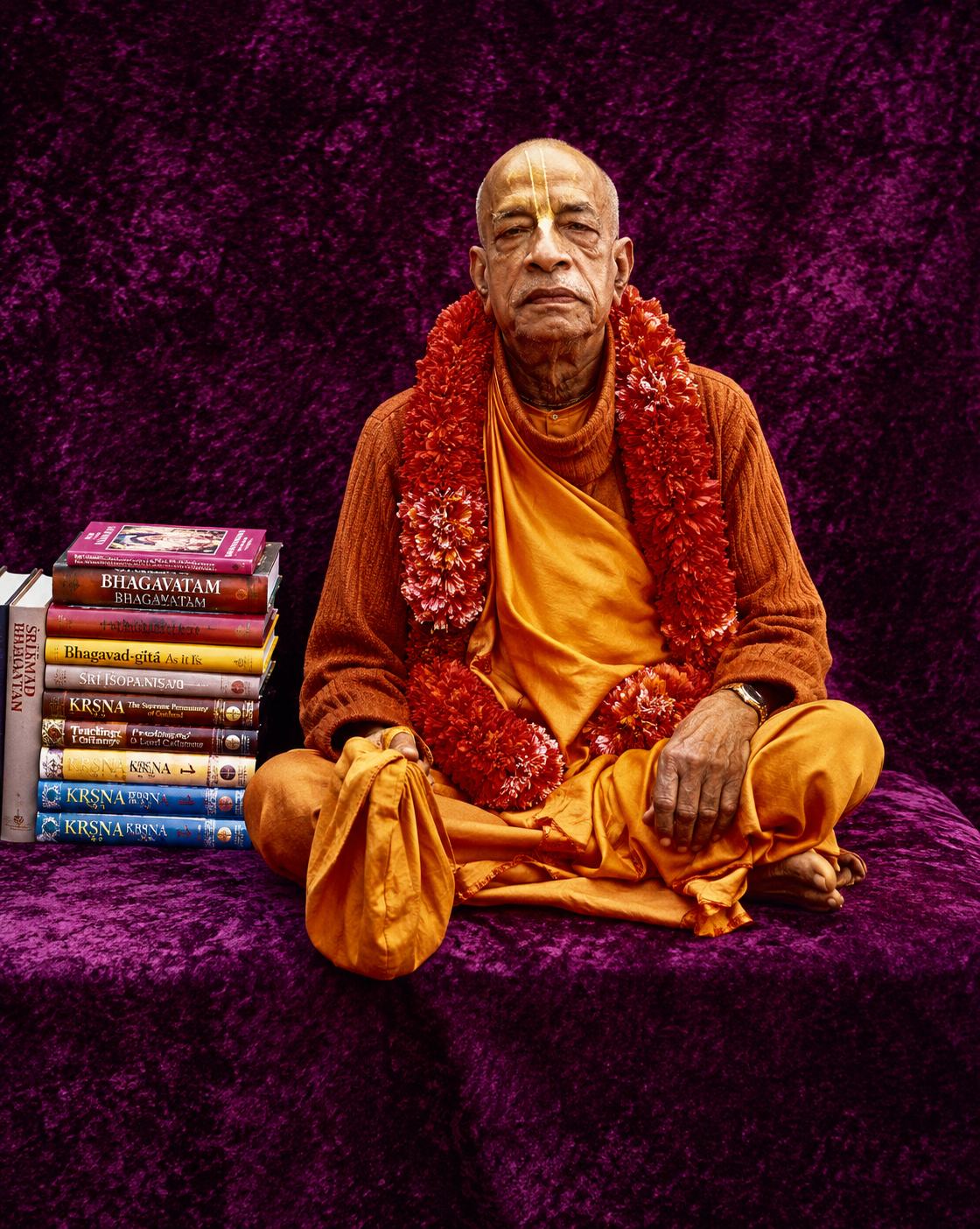
    His Divine Grace A.C. Bhaktivedanta Swami

    Prabhupada — Founder-Acharya of ISKCON

    "To bring the members closer together for the purpose of teaching a simpler, more natural way of life."

    — Constitution of Association 1966

    "Removal of a Temple president by the GBC requires support by the local Temple members."

    — Direction of Management, July 28 1970

    Temple Presidents Subordinated — A Violation of the Direction of Management

    GBC Resolution No. 52 - ISKCON Law – Amendment - 13th March, 1981:

    "The temple presicent is directly responsible to his regional secretary, local GBC and the governing body commission. Others do not have direct authority over the temple president. Disagreements regarding practical philosophy or policies can only be implemented via the above chain of responsibility. Objectiors must defer to the temple presidents' position and can initiate change only via the local GBC."


    The Direction of Management protected the temple president from above. ISKCON Law 52 placed him below a chain of three levels of authority: regional secretary, local GBC, and the GBC body.

    Srila Prabhupada gave the temple president enormous trust. ISKCON Law 52 placed him at the bottom of a ladder Srila Prabhupada did not build.

    The Direction of Management, signed by Srila Prabhupada in 1970, addressed the temple president's position with a single sentence of extraordinary weight: removal requires support by local Temple members. Not by the GBC alone. Not by the regional secretary. By the local members — the community the temple president served.

    That sentence was a protection. It placed the temple president's tenure in the hands of those who knew him closest — not in the hands of those furthest away. It was Srila Prabhupada's recognition that the temple president was not merely an administrator. He was the human face of ISKCON. He was the one who maintained the daily worship, the standards, the community.

    ISKCON Law 52 did not remove that protection. It simply built a ladder above the temple president's head and told him to answer to everyone on it.

    A general manages his battlefield. He knows the terrain. He knows his soldiers. He knows the enemy. He is accountable for the outcome. Now imagine that above the general sits a regional commander, above him a zonal commander, above him the supreme command. The general does not move without approval. He does not implement without sanction. He does not respond to his soldiers' needs without going through the chain. By the time the chain responds, the battle has moved on. And the general — who was closest to it — has become an administrator of someone else's decisions and many soldiers have sadly, senselessly died on the battlefield."

    The regional secretary position did not exist in the Direction of Management. Srila Prabhupada did not create it. The GBC created it in 1979 — Reference 9 of this series — as a position with greater responsibility than temple presidents. And now in 1981, it is formally codified: the temple president answers to the regional secretary.

    Srila Prabhupada's Spiritual Credence to Temple Presidents.

    This is not an administrative dispute. It is a spiritual one.

    Srila Prabhupada wrote to his temple presidents personally. He addressed them as his representatives. He called them the most important person in their temple. He gave them the responsibility of maintaining the standard of worship, the community of devotees, and the preaching of Kṛṣṇa consciousness in their area.


    He did not write to them as employees of a management structure. He wrote to them as his disciples entrusted with sacred service. The temple was not a branch office. It was a sanctuary. And the temple president was its guardian — accountable to Kṛṣṇa, to the community, and to the Founder-Āchārya.


    ISKCON Law 52 converted that sacred guardianship into a management position within a hierarchy. The temple president's first accountability is now not to Kṛṣṇa or to his community. It is to his regional secretary. A position that did not exist when Srila Prabhupada was present.

    The evidence of what this did to temple presidents is not theoretical. It is historical. Read more about the revolt, below .

    You cannot build a ladder on someone else's foundation and then tell the people who live in the house that the ladder is the new structure. The foundation is still there. It was signed. It was witnessed. It has never been revoked.

    The temple presidents who revolted understood this. They were not opposing governance. They were opposing the replacement of a founded governance structure with an unauthorised one. They were saying: we were given our position by Srila Prabhupada. The regional secretary was given his by the GBC. These are not equivalent authorities.

    They were right. The documents say so.

    ✦ Did You Know? ✦

    In the years following the establishment of the zonal acharya system and the subordination of temple presidents within the GBC hierarchy, temple presidents from across the world began formally objecting to the structure.

    Their complaint was consistent: they had been placed under the authority of GBC members who they had not elected, beneath regional secretaries who Srila Prabhupada had not appointed, and within a structure that Srila Prabhupada's founding documents had not authorised.

    Srila Prabhupada gave temple presidents spiritual credence and institutional protection. The resolutions gave the GBC a ladder. And they placed the temple presidents at the bottom of it.

    ✦ Did You Know? ✦

    Knowledge is not expensive, ignorance is.

    ✦ Did You Know? ✦

    "Prabhupada did not tell us everything on how to run the movement" a line often heard from ISKCON leaders.

    Prabhupada in his founding docs separated:

    The GBC - management and trouble shooting.

    The sanyasis – travelling and preaching.

    Temple presidents – local preaching.

    Property – fiducial owners (the trustees).

    ✦ Did You Know? ✦

    A Fiducial Trustee is a person or institution holding legal title to the assets who must manage them strictly for the beneficiary's benefit.

    Examining the Ladder

    We do not examine who is climbing. We do not examine why they are climbing. The series examines the ladder — who built it, what supports it, and where it leads.

    This work is sequential, not selective. It does not examine every GBC resolution. Rather, it examines every resolution, statement, or policy that conflicts with, departs from, or contravenes Śrīla Prabhupāda's founding documents and direct instructions.

    ACCESS THE ARCHIVES

    Explore Srila Prabhupada's original founding documents and the complete GBC Resolutions Record (1975–2026), now available in our public Google Drive archive — free to access, download, and share.

    Help us spread awareness by forwarding this email to fellow devotees and supporters.

    "This episode is available in multiple languages at www.justiceforsrilaprabhupadafoundation.com

    use the translate button on the page."

    Coming Next

    Episode No. 18 (7 min read)

    We Are Our Own Boss — No One Tells Us What to Do

    11th November  2026 · 6:00 PM IST

    Subscribe to ensure you receive every episode directly in your inbox.

    Copyright © 2026 Justice For Srila Prabhupada Foundation, All rights reserved.
    Our e-mail address is:
    justiceforsrilaprabhupada@gmail.com
    Want to change how you receive these emails?
    You can
    unsubscribe from this list or Manage your preference.

    Disclaimer — Use of the Term "Resolution"

    For the purposes of this work, the term "resolution" or "resolutions" is used as a collective reference and, where applicable, includes statements, action orders, provisional orders, amendments, and other decisions or recorded actions appearing in the GBC records.

    The use of the term "resolution" should therefore not be understood as altering or replacing the original classification or designation given to any particular item in the GBC records.

    Disclaimer and Statement of Independence

    This publication is prepared and presented solely for informational, educational, research and public-discussion purposes. It examines historical and institutional documents, including Srila Prabhupada's founding documents, publicly available GBC resolutions, statements and ISKCON laws, and considers the relationship between those documents and the authority exercised thereunder.

    Unless otherwise indicated, quotations from GBC resolutions, statements and ISKCON laws are reproduced from publicly available records and are intended to be quoted accurately and in their original context. Founding documents and other historical materials referred to herein have been reproduced or cited from publicly available primary or archival sources. Readers are encouraged to consult the original documents and sources themselves.

    The analysis and conclusions expressed in this publication are those of the authors/Foundation and are presented for discussion, research and educational purposes. They do not purport to constitute legal advice, a judicial determination, or a statement of binding legal or doctrinal authority. References to legal principles, doctrines or authorities are intended to explain the analytical framework adopted in this publication and should not be understood as representing that any particular legal conclusion has been finally adjudicated by a competent court or other authority.

    Where this publication expresses an interpretation, inference, criticism or opinion concerning institutional governance, authority or historical events, such statements are intended as good-faith analysis based upon the documents and materials identified or cited herein. Any distinction between documented fact, inference, interpretation and opinion is intended to be maintained throughout the publication.

    The Justice for Srila Prabhupada Foundation ("JFSPF" or the "Foundation") is an independent organization. It is not affiliated with, controlled by, endorsed by, authorized by, or representative of ISKCON, the Governing Body Commission ("GBC"), or any ISKCON-affiliated or associated entity, unless expressly stated otherwise.

    The Foundation does not represent that the GBC resolutions record, ISKCON archival material, or any other historical record examined for this publication is complete or exhaustive. The absence of a document from the sources examined should not be construed as proof that no such document exists. Readers are therefore encouraged to consult the underlying primary sources and any additional relevant materials.

    Nothing in this publication is intended to attribute a statement, position, motive, act or omission to any individual or organization beyond what is supported by the sources identified. Where the publication discusses disputed matters, competing interpretations or allegations, those matters are intended to be understood in that context and not as findings of a court or other competent authority.

    The publication is not intended to suggest that JFSPF speaks for Srila Prabhupada, his successors, ISKCON, the GBC, or any other individual or institution, nor is it intended to interfere with or determine any person's legal rights or remedies.

    All rights concerning third-party materials remain with their respective owners. Where third-party material is reproduced, quoted or referred to, such use is intended to be limited to the purposes of research, criticism, review, scholarship, education, reporting or discussion, as applicable under law. The inclusion of such material does not imply ownership of that material by JFSPF.

    The Foundation reserves the right to correct, clarify or update this publication if additional authentic primary-source material becomes available or if any factual error is identified.