Supplement Number 2
Supplement Number 2: Why GBC Resolutions Matter to Every Devotee. A Sequential Examination.
|
Srila Prabhupada's Founding Documents & The GBC Resolutions Record (1975–2026)A Sequential Examination |
Supplement Number 2
Why GBC Resolutions Matter to Every Devotee
Reading Time : 4 minutes
3rd October 2026
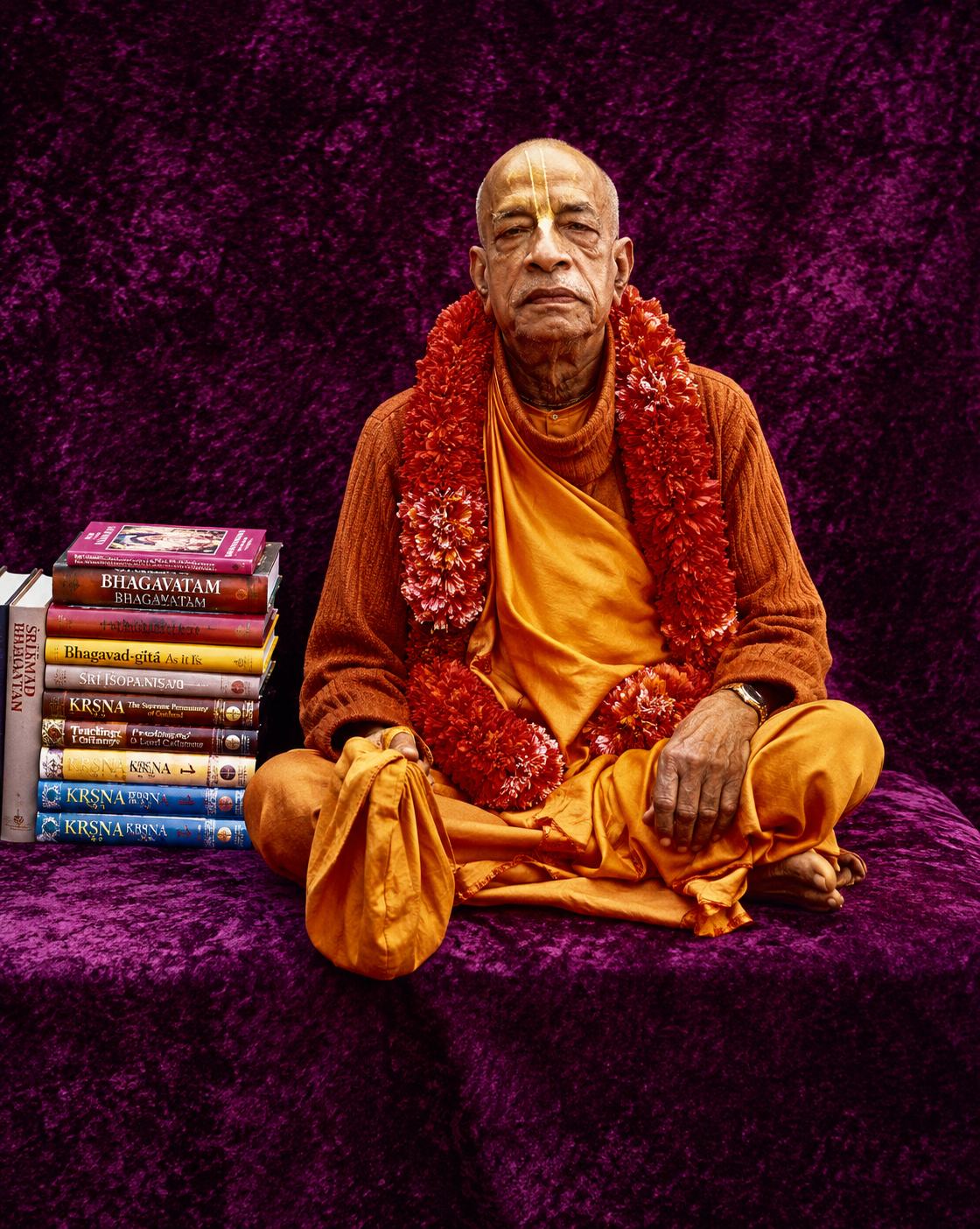
His Divine Grace A.C. Bhaktivedanta Swami
Prabhupada — Founder-Acharya of ISKCON
Most of us hear the words GBC resolution and think: that is not for me. That is for the temple president. For the GBC members. For the big leaders.
But here is the truth.
A GBC resolution passed in a closed meeting in Mayapur can change life in your temple within weeks. It can change who your guru is. It can change how your children are educated. It can change who gets to speak at the morning programme. It can change where the temple's money goes.
You may never have read a single resolution. But every resolution has already read you.
The Hidden Rulebook
Think of it this way.
When you joined ISKCON, nobody gave you a rulebook. You chanted. You served. You followed the schedule. You took initiation.
But there is a rulebook. It is called the GBC resolutions record. It has been growing since 1975. It now runs to more than five thousand resolution statements and institutional rules.
It decides: who can be your guru. What your guru is allowed to do. Whether your guru can accept dakshina. Whether your temple president can invite a visiting swami to speak. What your children learn in the gurukula.
You did not vote on any of it. You were not consulted. But it governs your spiritual life.
How Does a Resolution Affect My Daily Life?
Here is a simple example.
When you take initiation, you now chant your diksha guru's pranam mantra first. Then Srila Prabhupada's pranam mantra second.
Why? Because a resolution passed in 1999 said so. Resolution 405 (B).
Srila Prabhupada's founding documents say he is the founder. The resolution says: chant the other guru's mantra first. One resolution. One order of chanting. Hundreds of thousands of devotees following it. Most of them do not know it came from a committee meeting.
What Do Devotees Think Is Normal — That Actually Came From a Resolution?
Things devotees hear every day in temples — and where they actually came from:
The GBC is the highest authority in ISKCON.
Not from Srila Prabhupada's founding documents. The word ecclesiastical — meaning highest spiritual authority — first appeared in a resolution in 1983.
My guru was approved by the GBC.
Not from any founding document. The GBC approval system for gurus was built through resolutions from 1978 onwards.
The temple property belongs to ISKCON.
From a 1998 resolution called the Oath of Allegiance. Not from the original founding documents. (Upcoming supplement in this series - "Who Owns the Temples?")
Srila Prabhupada is the preeminent siksha guru.
Those exact words were written into a GBC resolution in 1990. They do not appear in any document Srila Prabhupada himself signed.
For Our Matajis — This One Is Personal
How many hours have our Matajis spent distributing Srila Prabhupada's books? Standing in markets. Knocking on doors. Sitting on cold streets. All for Srila Prabhupada's mission.
Every book sold, every donation received, every laxmi collected — that goes into the institution.
How many GBC resolutions acknowledge this? How many resolutions discuss what was collected from book distribution and where it went? How many thank the Matajis?
The honest answer, from the resolutions record, is: almost none.
The first resolution requiring any financial reporting from ISKCON leaders was passed in 1999 — twenty-four years after the first GBC resolutions. The Matajis who gave the most were the last to be told how it was used.
Why This Series Exists
Srila Prabhupada left seven documents. They tell us exactly how ISKCON should be run. Who has authority. What that authority can and cannot do. Who the trustees should be. Who the initiates belong to.
This series places those seven documents beside the GBC resolutions record — one resolution at a time, from 1975 to 2026 — and asks a simple question:
Does this resolution follow what Srila Prabhupada established?
We do not answer for you. We place the documents side by side. You read. You decide.
Knowledge is your protection. That is why this series exists.
What Is a Resolution?
A resolution is a formal decision passed by a group of people in a meeting.
Once it is passed — it becomes a rule.
In ISKCON, GBC resolutions become the rules that govern temples, gurus, initiations, property, and spiritual standards across the world.
They are not scripture. They are not Srila Prabhupada's direct instructions. They are decisions made by a committee — that have shaped the lives of hundreds of thousands of devotees.
Some of those decisions followed what Srila Prabhupada established. Some moved away from it.
DEVOTEE REFLECTION
38 CLAUSES
Screen the 38 clauses contained in Śrīla Prabhupāda's founding documents and the direct orders of 1977. They document how ISKCON is to be managed and run—even today.
DEVOTEE REFLECTION
NO DISTURBANCE PLEASE
Many devotees say they want the truth. Yet, when confronted with it, what they often want most is: "No disturbance, please."
DEVOTEE REFLECTION
THE TEST
Praising the Founder after his departure is easy. Quoting his desires is even easier. Following his direct orders—that is the test.
ACCESS THE ARCHIVES
Explore Srila Prabhupada's original founding documents and the complete GBC Resolutions Record (1975–2026), now available in our public Google Drive archive — free to access, download, and share.
GBC RESOLUTION SOURCES:
"This episode is available in multiple languages at www.justiceforsrilaprabhupadafoundation.com use the translate button on the page."
COMING NEXT
Episode No. 6 (6 min read)
Higher Than What?
4th October 2026 · 6:00 PM IST
Subscribe to ensure you receive every episode directly in your inbox.
Copyright © 2026 Justice For Srila Prabhupada Foundation, All rights reserved.
Our e-mail address is:
justiceforsrilaprabhupada@gmail.com
Want to change how you receive these emails?
You can unsubscribe from this list or Manage your preference.
Disclaimer — Use of the Term "Resolution"
For the purposes of this work, the term "resolution" or "resolutions" is used as a collective reference and, where applicable, includes statements, action orders, provisional orders, amendments, and other decisions or recorded actions appearing in the GBC records.
The use of the term "resolution" should therefore not be understood as altering or replacing the original classification or designation given to any particular item in the GBC records.
Disclaimer and Statement of Independence
This publication is prepared and presented solely for informational, educational, research and public-discussion purposes. It examines historical and institutional documents, including Srila Prabhupada's founding documents, publicly available GBC resolutions, statements and ISKCON laws, and considers the relationship between those documents and the authority exercised thereunder.
Unless otherwise indicated, quotations from GBC resolutions, statements and ISKCON laws are reproduced from publicly available records and are intended to be quoted accurately and in their original context. Founding documents and other historical materials referred to herein have been reproduced or cited from publicly available primary or archival sources. Readers are encouraged to consult the original documents and sources themselves.
The analysis and conclusions expressed in this publication are those of the authors/Foundation and are presented for discussion, research and educational purposes. They do not purport to constitute legal advice, a judicial determination, or a statement of binding legal or doctrinal authority. References to legal principles, doctrines or authorities are intended to explain the analytical framework adopted in this publication and should not be understood as representing that any particular legal conclusion has been finally adjudicated by a competent court or other authority.
Where this publication expresses an interpretation, inference, criticism or opinion concerning institutional governance, authority or historical events, such statements are intended as good-faith analysis based upon the documents and materials identified or cited herein. Any distinction between documented fact, inference, interpretation and opinion is intended to be maintained throughout the publication.
The Justice for Srila Prabhupada Foundation ("JFSPF" or the "Foundation") is an independent organization. It is not affiliated with, controlled by, endorsed by, authorized by, or representative of ISKCON, the Governing Body Commission ("GBC"), or any ISKCON-affiliated or associated entity, unless expressly stated otherwise.
The Foundation does not represent that the GBC resolutions record, ISKCON archival material, or any other historical record examined for this publication is complete or exhaustive. The absence of a document from the sources examined should not be construed as proof that no such document exists. Readers are therefore encouraged to consult the underlying primary sources and any additional relevant materials.
Nothing in this publication is intended to attribute a statement, position, motive, act or omission to any individual or organization beyond what is supported by the sources identified. Where the publication discusses disputed matters, competing interpretations or allegations, those matters are intended to be understood in that context and not as findings of a court or other competent authority.
The publication is not intended to suggest that JFSPF speaks for Srila Prabhupada, his successors, ISKCON, the GBC, or any other individual or institution, nor is it intended to interfere with or determine any person's legal rights or remedies.
All rights concerning third-party materials remain with their respective owners. Where third-party material is reproduced, quoted or referred to, such use is intended to be limited to the purposes of research, criticism, review, scholarship, education, reporting or discussion, as applicable under law. The inclusion of such material does not imply ownership of that material by JFSPF.
The Foundation reserves the right to correct, clarify or update this publication if additional authentic primary-source material becomes available or if any factual error is identified.